Webflow
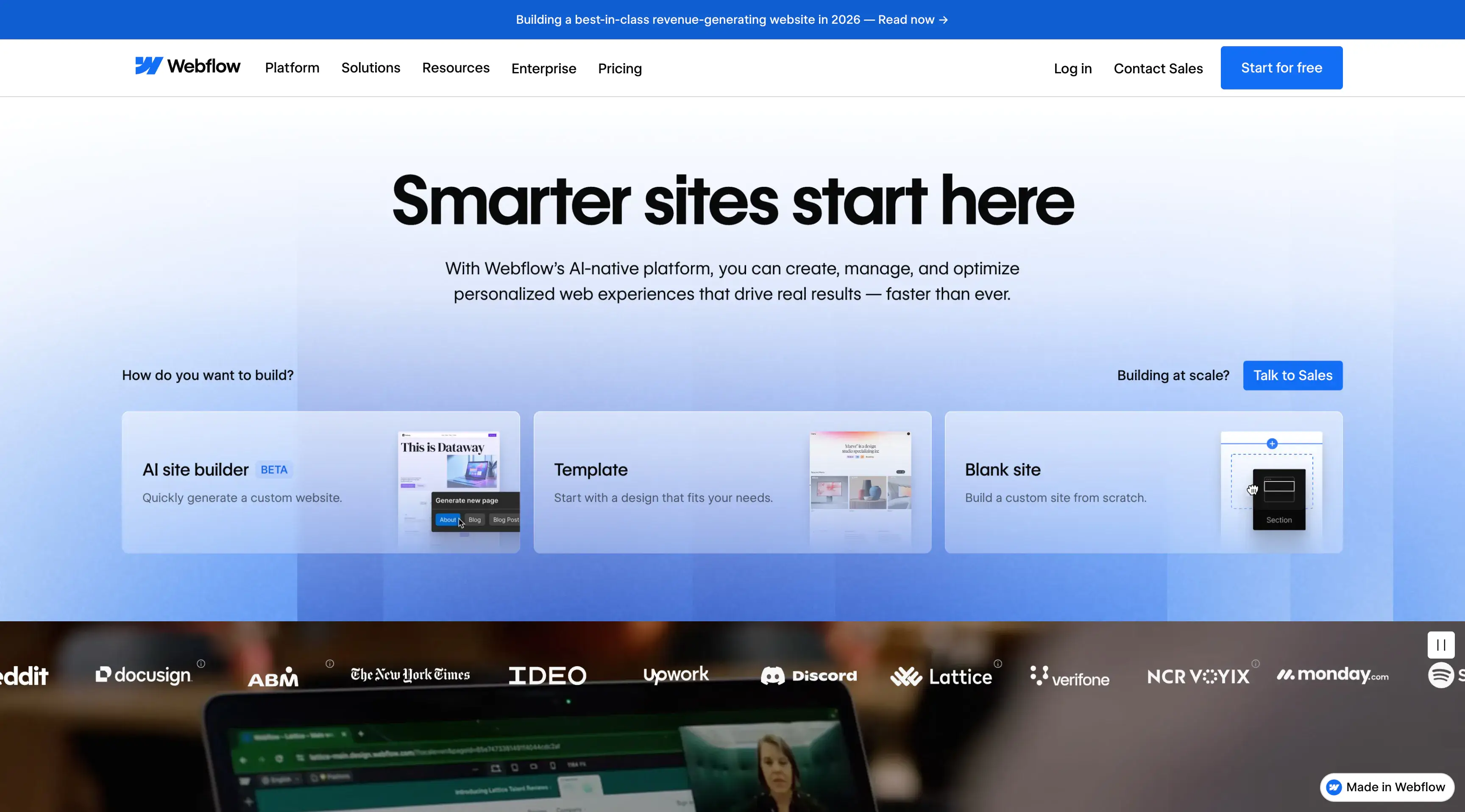
Rapid growth brought both opportunity and complexity. As Webflow’s product suite and organization scaled, our messaging became harder to distill. The homepage fell out of sync with the reality of the platform — still reinforcing a “site builder” perception even as we launched advanced capabilities like experimentation, analytics, and optimization. By 2024, this disconnect made it harder for marketing leaders to understand where Webflow fit into their broader stack. We needed to simplify a complex story, align internal teams around a shared vision, and create a system that could evolve alongside the product.
We partnered with N4 to reimagine the Webflow.com homepage — not as a one-off redesign, but as a scalable system that could grow with the brand. I played a key role in cross-functional collaboration and helped introduce a more systematic, future-focused approach to how we planned, designed, and built core surfaces of the site. The new homepage repositioned Webflow as a platform for modern marketing teams — not just designers — and laid the foundation for ongoing A/B testing to refine messaging and optimize conversion. The rebuild led to a 40% increase in enterprise demo requests and a 25% lift in conversion rates, with an experience designed to evolve based on real user behavior.
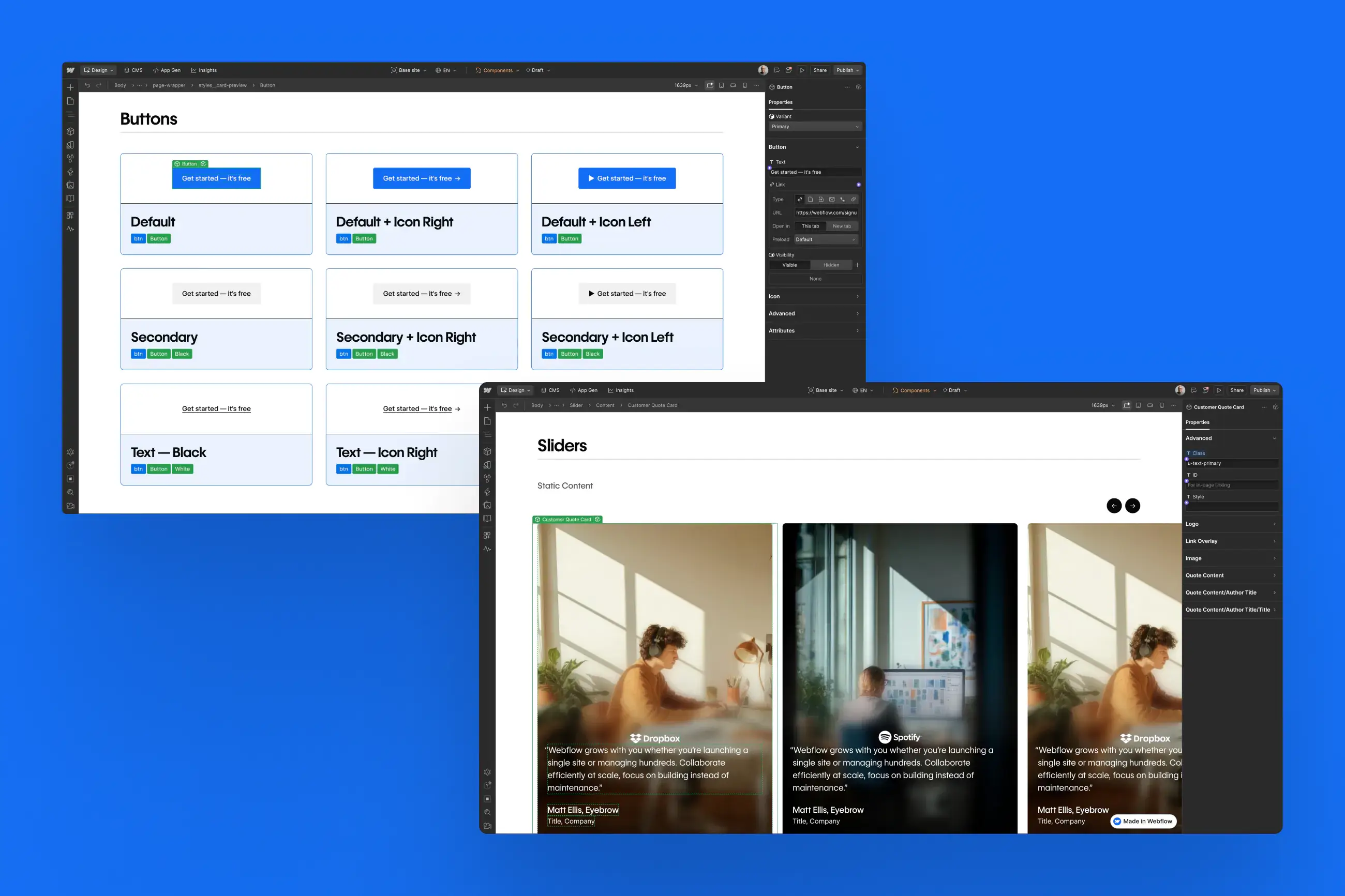
Design systems and scalable styles
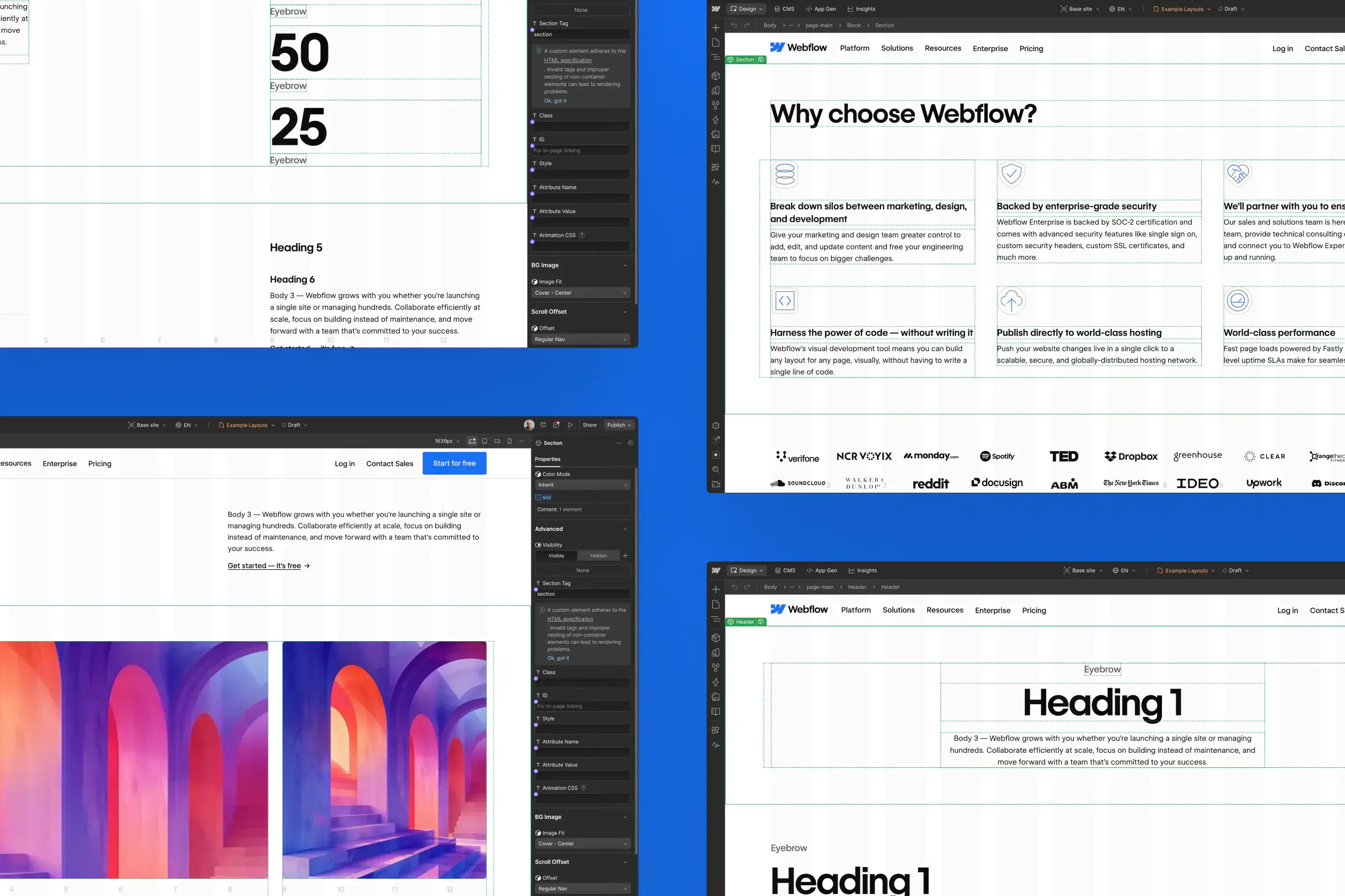
As a team, we partnered with N4 to develop Webflow’s brand system and translate it into a scalable set of web styles and components. I helped implement those systems on webflow.com — building the foundations for type, color, spacing, and layout that support long-term growth across the marketing site.
Dynamic content workflows
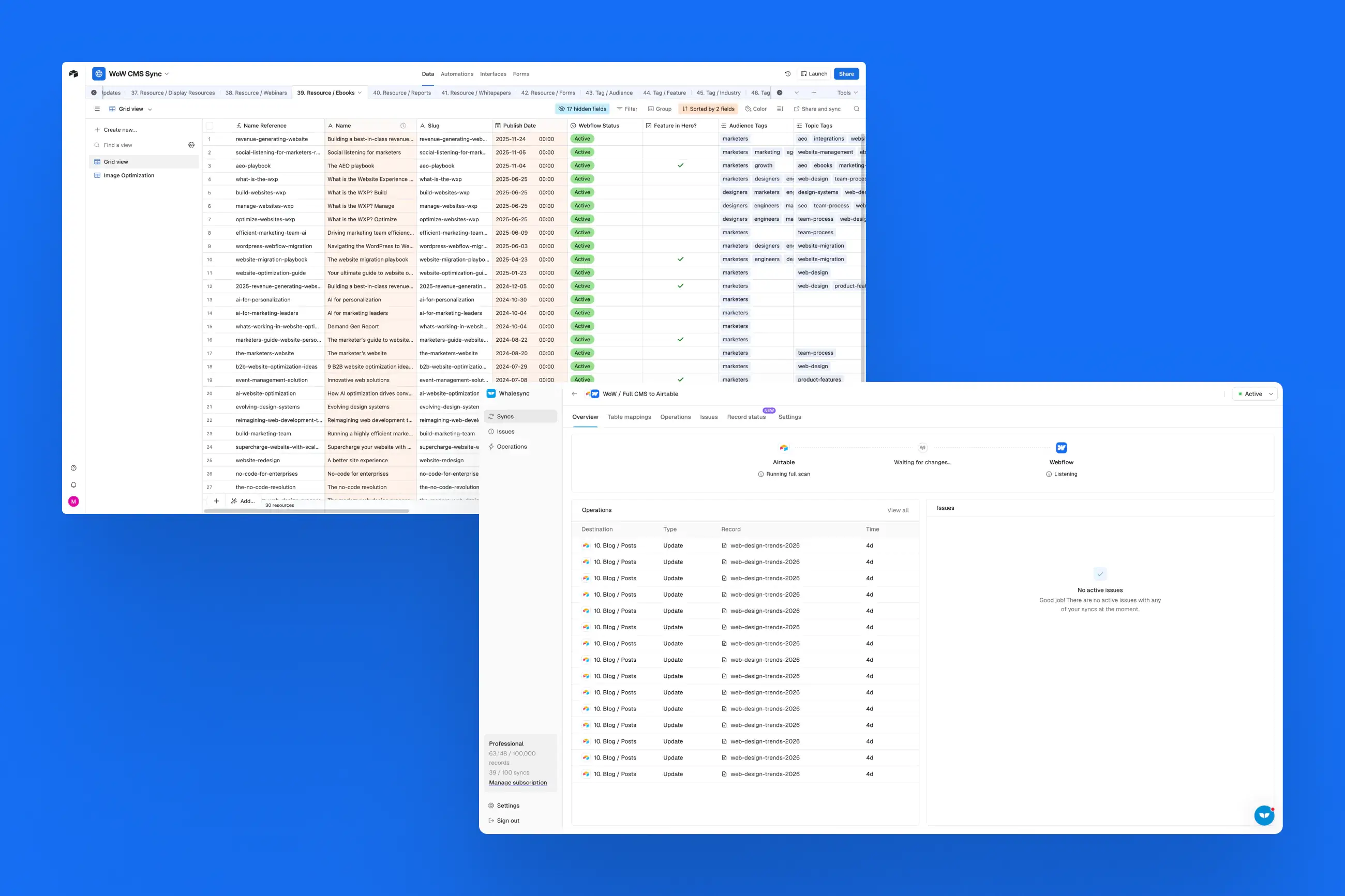
We consolidated 16 separate Webflow projects into a single, unified build — dramatically simplifying how the marketing team manages content. I helped audit over 150 CMS collections across those projects and reduced them to 47 streamlined collections. Today, all CMS data is managed globally through Airtable and synced to Webflow via Whalesync. The result is a faster, more reliable publishing workflow that gives the team full control without compromising structure or design.
Component‑driven page building
Our team built a library of smart, scalable components that empowered the Webflow marketing team to quickly build new pages using existing patterns. This system gave cross-functional partners the flexibility to launch landing pages independently — freeing up the brand team to focus on larger, more strategic initiatives — all while maintaining consistency, accessibility, and performance across the site.